Monday, May 15, 2017

This Blog Motivates Me...

https://www.nytimes.com/2017/05/13/technology/google-education-chromebooks-schools.html  This is an article from the NYT about the encroachment of Google Schools into the classroom. "Today, more than half the nation’s primary- and secondary-school students — more than 30 million children — use Google education apps like Gmail and Docs, the company said." According to the article this has lead to the emphasis of certain skills in the classroom, such as teamwork and problem solving, while de-emphasizing more traditional skills such as the learning of math formulas. Parents are concerned by the urging of seniors to convert their school email accounts to GMail, with the potential for using the students personal information for marketing.


https://www.nytimes.com/2017/05/12/world/americas/dinosaur-fossil-nodosaur-alberta-oil-sands.html This is an article in the NYT about a mine in Alberta which has yielded a dinosaur "mummy, 110 million years old. The "mummy", the best preserved specimen of its kind, was found by a shovel operator at  the Millennium Mine. It was photographed for The National Geographic.


https://www.sciencenews.org/article/yes-statins-protect-hearts-critics-question-their-expanding-use This is an article from Science News about the expanding use of the statins and its risks. Statins were discovered in the fermented broth of rice mold that blocks the enzyme action of HMG-CoA reductase, which lead to a discovery of a related compound by Merck which lead to Lovastatin and the rest is history, or rather, pharmacology.  The CTT trials in 1994 revealed other benefits from taking statins. There are downsides, such as effects on muscle (Baycol was removed from the market). A 2008 study in NEJM pointed out that more people developed Type II Diabetes if they took a statin than those who did not.Observational data following real-world data reveal side effects worse than the CTT study; more muscle pain in those taking statins (JAMA) compared with those taking placebo.


illustration of man with umbrella under raining statins

https://www.nytimes.com/2017/05/15/health/immune-system-drugs-monoclonal-antibodies.html?_r=0  This is an article from the NYT about a study in NEJM about resistance developing to drugs. Many frontline therapeutics are monoclonal antibodies, which are proteins, and the body's immune system can make antibodies which react with the drugs making them inactive against their targets. Pfizer had a drug in clinical trials that reduced cholesterol but had to be pulled due to patients' lack of response because of antibodies to the drug.


http://www.nationalgeographic.com/magazine/2017/06/dinosaur-nodosaur-fossil-discovery/ This is an article from Nat'l Geographic about the newly discovered Canadian nodosaur dinosaur fossil in Millenium Mine. The level of fossilization (it is a whole fossil) was produced by its rapid undersea burial. In most cases, as it describes in the article, it is rare that minerals replace soft tissues before they rot. The nodosaur is a type of Ankylosaur.
Picture of an man chiseling free a fossil under a spotlight in a dark lab

http://www.philly.com/philly/health/health-news/Dogs-Lyme-disease-ticks-sentinel-warning-humans-vet.html An article in Philly Inq. about how dogs can be used as indicators whither Lyme will be found next in humans. Although we don't catch Lyme from dogs, the tick bites humans and dogs from the tall grass where it lives. Since there is no foolproof blood test for Lyme and it is difficult to diagnose, modeling animal disease can help determine whether Lyme might be in the area. This study was done by North Carolina State U and is published in PLOSONE.
 http://media.philly.com/images/1200*800/05-17-Lyme-Map.gif

 https://www.nytimes.com/2017/05/16/health/ivg-reproductive-technology.html  Article in NYT about the possible use of skin cells to produce babies, also known as in vitro gametogenesis. Researchers have published in Science Translational Medicine their objections to the implications for humans of this work which could potential produce babies from one parent.  Last year, researchers in Japan used IVG to make viable eggs from the skin cells of adult female mice, and produced embryos that were implanted into female mice, who then gave birth to healthy babies.


http://www.philly.com/philly/health/science/philly-museums-fossil-surgeon-reveals-ancient-past-20170519.html  This is an article from the Philly Inquirer about Fred Mullison of the Academy of Natural Sciences, a fossil surgeon who has built a cast of Tiktaalik Roseae from the Canadian Arctic. The fossil preparator was formerly a commercial photographer. Tiktaalik roseae, which resembles a fish, has muscular fins that allowed it to wriggle onto land for short stretches.

HE1FOSSIL16-AHE1FOSSIL16-A

https://www.nytimes.com/2017/05/20/opinion/sunday/donald-trump-vs-womens-health.html?_r=0 This is an article from the Sunday Review of the NYT about the problems of throwing people off of health insurance and cervical cancer. The US has one of the lowest cervical cancer survival rates in the developed world and is preventable. Trump is linking funding of some organizations that provide cervical cancer screening to their support and support for abortion so the problem of cervical cancer low survival numbers will increase.


https://www.nytimes.com/2017/05/19/opinion/sunday/you-still-need-your-brain.html Also from the Sunday Review an article about the Googlization of reading. The brain is better than Google in determining context which is provided by one's memory but not internet dictionaries. Also, memorization is quicker than looking up things, like equations, on the internet. The brain beats the internet in terms of speed and context but the internet bests the brain in terms of volume.


https://www.nytimes.com/interactive/2017/05/18/climate/antarctica-ice-melt-climate-change.html This is a report from the NYT from above the Ross Sea in Antarctica.  Billions of tons of ice every year move from the land to the sea, which was thought to be immutable. But, according to this article, scientists fear that parts of the Antarctic ice sheet may be in the stages of an "unstoppable disintegration." This disintegration could result in the need for millions of coastal refugees to flee their homes for safety inland.
frearson3.jpg

http://time.com/4784029/ebola-outbreak-congo/ This is an article about a new outbreak of Ebola virus in the Congo. Due to a conflict in the Central African Republic and the remoteness of the area of the outbreak, it is difficult for WHO workers to respond to the cases and it make take weeks to begin treatment of those affected.


Hygienists wearing protective suits disinfect the toilets of the Ebola treatment centre in Lokolia, on October 5, 2014.

https://www.nytimes.com/2017/05/19/climate/trump-epa-budget-superfund.html  Article about 2018 budget cuts at EPA which would reduce by 40% the funding for EPA employees involved in developing and overseeing environmental regulations and 25% the Superfund cleanup funds.The budget would also eliminate funding on twelve state-run programs to protect watersheds, including the Chesapeake Bay.


https://www.nytimes.com/2017/05/21/health/sodium-bicarbonate-solution-critical-shortage-hospitals.html?_r=0 This is a NYT article about the shortage of sodium bicarbonate, found in most kitchens but also a necessary ingredient for open heart surgery.  Pfizer, the main supplier, shifted its distribution location but now its own suppliers are also running low. They attribute the shortage, which is causing surgeries to be postponed, to "a confluence of factors."


https://www.nytimes.com/2017/05/22/well/family/pediatricians-say-no-fruit-juice-in-childs-first-year.html An article in the journal Pediatrics is recommending that children under the first year of life not be given fruit juice and furthermore that only four ounces of juice be given to one-to-three year olds. The idea is that consumption of fruit juice may cause babies to cut down on formula or breast milk, which are a preferred source of protein, fat, vitamins, minerals and calories. Parents are informed that whole fruit is preferable to juice and is a better source of fiber than juice. It is not certain whether the next U.S.D.A. guidance will forbid juice for infants based on these recommendations. But an agriculture department spokesman says that for the first time the very young will be included in the 2020 guidelines.

Wednesday, May 10, 2017

Tuesday Afternoon Massacre

https://www.nytimes.com/2017/05/08/climate/alaska-carbon-dioxide-co2-tundra.html?_r=0 This is an article from the NYT about a Harvard study published in the Proceedings of the National Academy of Sciences of the carbon emissions from the North Slope tundra of Alaska showing that the carbon emissions have increased 70% since the 1970s. The "greening of the Arctic" is occurring as temperatures rise globally but also the study shows that by delaying freeze-up this warming trend also allows the processes that release carbon dioxide to continue longer.


https://www.nytimes.com/2017/05/08/nyregion/dead-rivers-closed-beaches-an-acute-water-crisis-on-long-island.html An article from the NYT about the water crisis on Long Island and the water quality in the Great South Bay. Suffolk County has fewer houses using sewers than Nassau County to the west. A sewer was built for Babylon and parts of Islip but was so mired in corruption that other municipalities have not followed suit. There are algal blooms in the Great South Bay and the shellfish industry has fallen more than 90% since 1980. Homeowners are advised to invest in denitrification systems.


https://www.usnews.com/news/business/articles/2017-05-09/study-side-effects-emerge-after-approval-for-many-us-drugs This is an article in USNews about site effects that have emerged after drug approval by the FDA. This study was published in JAMA and reviewed 222 prescription drugs approved by the FDA from 2000 to 2010.   71 flagged drugs caused reactions from serious skin reactions, liver damage, cancer and even death. These had all pass clinical trials for safety but possibly were not tested for a long enough interval.


The Associated Press

https://www.nytimes.com/2017/05/10/health/brain-defect-gut-bacteria-microbiome.html?_r=0 Article from NYT about a study published in Nature about a brain disease that has been linked to a gut microbe. Hereditary cerebral cavernous malformations cause bubbles in the brain which can burst, causing a brain hemorrhage and death. Manipulating the microbiome of newborns with a fecal transplant may provide a cure.


https://www.nytimes.com/2017/05/12/health/new-gene-tests-pose-a-threat-to-insurers.html This is an article from the NYT Business section about people who are using 23andMe genetic testing kits to find out whether they have the ApoE4 and therefore are possible candidates for Alzheimers Disease. This revelation of their genetic propensity towards AD is enough to make them purchase the expensive Long Term Care Insurance. 23andMe promises not to reveal the results to insurance companies but if everyone who finds out about their genetic risks buys these policies and those with no such risk do not, paying out could be a crisis for the companies.


https://www.nytimes.com/2017/05/12/nyregion/exotic-animal-hospital.html This is an article about NY's only exotic pet hospital. They do not see cats and dogs. The article spotlights a duck with reproductive problems. The veterinarian had previously removed the duck's reproductive tract but somehow she kept laying eggs. She required $1,200 in reproductive surgery.


https://www.nytimes.com/2017/05/08/health/salt-health-effects.html?_r=0 An article in the BYT about two studies done on Russian cosmonauts published in the Journal of Clinical Investigation that determined that eating salt made one less thirsty and a further study that mice burned more calories when they consumed more salt. A theory from one of the observations was that the body produced more water with a higher sodium intake, possibly due to the effects of glucocorticoid hormones.

Sunday, April 30, 2017

Climate Change Protest March

http://www.philly.com/philly/health/cancer/Promising-therapy-for-rare-eye-cancer-raises-hopes-for-targeting-other-cancers.html This is an article from the Philadelphia Inquirer about a novel, light-activated drug for melanoma that affects the eyes. The drug is coupled with a light sensitive dye that is activated by laser light.

hs1eyecancer30-b-24042017-0005

https://www.nytimes.com/2017/04/29/world/europe/leeches-russia-medicine.html An article from the NYT about the uses of leeches in medicine. In the US, the FDA has licensed the use of leecges to remove excess blood from severed body parts that have been re-attached. In Russia they are used as a preventative for stroke and heart disease. Leech venom is a natural anticoagulant.


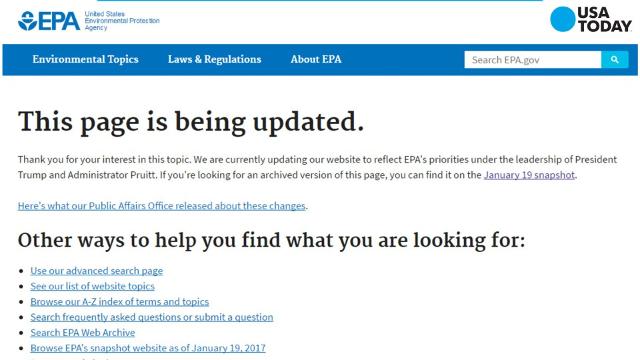
https://www.usatoday.com/story/news/politics/2017/04/29/epa-removes-climate-change-data-other-scientific-information-website/101072040/  From USA today a report that the EPA is removing its climate change data from its website with a view towards "reflecting the views of the leadership of the agency."


http://www.philly.com/philly/health/health-news/Five-Questions-about-blue-light-smartphones-ipads-iphones-sleep-optometric.html This is an article from the Inquirer about eye problems associated with excessive exposure to light in the blue range from computers and other devices. Concerns are about the propensity of excessive exposure to blue light causing eye strain, blurred vision, dry eyes. A survey by the American Optometric Association reveals that although 88% of Americans are aware of the fact that their vision can be harmed by the overuse use of these devices, they keep using them. To quote from the article, "The AOA has several recommendations.  First of all, the association urges patients to follow the 20-20-20 rule.  When you’re looking at a screen, take a 20-second break and look at something at least 20 feet away every 20 minutes."
iStock_laptop-3x2


https://www.nytimes.com/2017/05/03/sports/want-to-make-more-baskets-science-has-the-answer.html?_r=0 This is an article from the NYT about throwing more accurately. A paper published in Royal Society Open Science discusses the trade-off between throwing fast and throwing accurately and concludes that  throwing fast makes it harder to release the object at just the right moment. But, the study additionally concludes that the ball release speed affects the curvature of the path that the ball takes. The conclusions were based on mathematical modeling.


 https://www.nytimes.com/2017/04/24/well/family/fending-off-math-anxiety.html This is an opinion by Perry Klass about math anxiety in children. The doctor opines that, in order to instill number confidence in children it is important that early math skills be developed by parents talking to their children about numbers early in life much as  they introduce their children to letters and the alphabet as a preliminary to learning to read.  There is a program called "Bedtime Math" an app that presents short numerical problems to children. A 2015 study determined that children's math skilled improved if their parents used this program with them compared to a control group.


https://www.nytimes.com/2017/05/01/health/artificial-nose-scent-disease.html  From the NYT an article about a company called Owlstone, which manufactures chemical sensors. Although the company originated with the purpose of detecting chemical weapons and explosive, the focus has shifted to medical sensors, specifically cancer detection. They are currently conducting a trial with the University of Warwick, to detect colon cancer from urine samples.

https://www.nytimes.com/2017/05/07/us/politics/epa-dismisses-members-of-major-scientific-review-board.html?_r=0 An article from the NYT about the dismissal of at least 5 members of a major scientific review board which advised the EPA. Scott Pruitt intends for the EPA to become much more lenient towards the coal industry, contradicting the recommendations of both of the EPA;s scientific review boards. Both of the review boards have been the subjects of political attacks. A Republican senator from Texas says that the advisors will be replaced with members from "the business world."


https://www.scientificamerican.com/article/aspirin-may-prevent-cancer-from-spreading-new-research-shows/ This is an article in the SciAm about aspirin's actions in preventing malignancies. work done at Brigham and Women's Hospital has shown that platelets help malignant cells to spread and that cancer cells use platelets to hide from the immune system. Aspirin is able to "re-wire" megakaryocytes (progenitor cells of platelets) to turn of genes that allow platelets to camouflage cancer cells. This latter work was done at Duke University.


http://www.samefacts.com/2017/05/energy-the-environment/the-wall-street-cherry-picking-festival/ Here is a column called "The Wall Street Cherry-Picking Festival" about the second column by Bret Stephens, the "climate confusionist" hired by the NYT. The blogger criticizes the Times columnist for picking the only year in a data trend showing emissions in Germany that was an outlier, when emissions fell. The blog shows the comparable data chart for US, which show the same decrease for the year in question.


https://www.nytimes.com/2017/05/04/science/julius-youngner-dead-salk-polio-vaccine-researcher.html?_r=0 An obit in the NYT for Julius Youngner, co-inventor with Jonas Salk, of the polio vaccine. These early immunologists were really heroes.


hs1eyecancer30-b-24042017-0005

Sunday, April 23, 2017

March for Science

https://www.nytimes.com/2017/04/21/opinion/henrietta-lacks-why-science-needs-your-cells.html?_r=0  This is an opinion piece from the NYT written by a Harvard Law School and UPenn professor about the controversy around the Henrietta Lacks story. They make a solid point about how the injustice is in the racism in the medical treatment she received but the fact that her cells have been critical to many medical advances and treatments should not be decried as much as it has been and used as a teaching tool demonizing medical research. The opinion makes the point that no parts are being removed from peoples' bodies without their consent. Patients should be made aware  of how thier specimens are being used. This is an  important piece which can be studied in tandem with the HBO movie.


https://www.nytimes.com/2017/04/12/well/move/an-hour-of-running-may-add-seven-hours-to-your-life.html  This is a piece from the Well column in the NYT about how running can increase one's lifespan. The data comes from the Cooper Institute in Dallas.  The new study was published in Progress In Cardiovascular Disease.  Running, whatever the pace, dropped a person's risk of death by almost 40% and they determined that, if every nonrunner who had been part of the study took up the sport, there would have been 16% fewer deaths over all and 25% fewer fatal heart attacks.


https://www.nytimes.com/2017/04/17/science/march-for-science-voices.html  From the NYT about the holdouts. Some people "who work in a variety of scientific fields" according to the article, and are "passionate about science" will refuse to march in order to avoid what they see as the politicalization of science. In the responses sub,itted to the NYT, some Times readers feel that combining ideology and science would weaken the impact of basic research.


https://www.nytimes.com/2017/04/20/health/brain-memory-dementia-epilepsy-treatments.html This is an article from the NYT about the implantation of a pacemaker in the brain as a cure for epilepsy. The UPenn team did this study of epilepsy patients, which wa spublished in Current Biology. This is called "closed-loop cognitive stimulation" with implanted electrodes which deliver microsecond pulses.


https://www.nytimes.com/2017/04/21/opinion/the-planet-cant-stand-this-presidency.html An opinion piece by Bill McGibben, among others, about the possibilities for extinction of endangered organisms and other potentially dangerous effects on the environment with the rollback of environmental regulations and protections under the new Trump administration.


https://www.nytimes.com/2017/04/27/opinion/sowing-climate-doubt-among-schoolteachers.html?_r=0  This is an opinion from the NYT about the Heartland Institute's sending a book called "Why Scientists Disagree about Global Warming" to public school teachers in the US. The writer correctly calls this unscientific propaganda but warns that some teachers are vulnerable to this approach, especially those in states like Louisiana and Tennessee where state law allows teaching of alternative explanations of evolution and climate change. The implication is that this apprach may unfortunately mislead tens of thousands of students who teach from this book even if just a few teachers use it.


https://www.nytimes.com/2017/04/26/science/prehistoric-humans-north-america-california-nature-study.html This is an article in the NYT by Carl Zimmer about mastodon bones found near San Diego; the finding was published in the journal Nature.This is possible evidence that California's first settlers may have antedated the movement of humans out of Africa. They may have been Neanderthals or another extinct lineage.  The thought is that the smashed bones were broken by humans but some scientists speculate that the bone fractures may have been caused by factors other than human breakage.


https://www.nytimes.com/2017/04/26/nyregion/invisible-bird-killer-lurks-in-revitalized-new-jersey-meadowlands.html Also from the NYT a report about flames resulting from methane build-up in the Kingsland landfill in the NJ Meadowlands causing damage and death to birds and other wildlife. The landfill was closed in the 1990s but methane continues to build up from the garbage left behind.

Friday, April 7, 2017

Science for Life

http://www.sciencetimes.com/articles/11808/20170407/octopus-possess-super-power-rewrite-rna.htm
This is an article from Science Times which was taken from a Washington Post report about squid's and octopus' unusually ability to rewrite their own RNA. They can edit the RNA and make different proteins from the same RNA. The colder the habitat the more likely it is that the animal will make edits. Scientists want to use this to understand adaptability to the environment.


Sydneysiders Flock To Fishmarkets At Christmas Time

https://www.nytimes.com/2017/04/06/health/fda-genetic-tests-23andme.html?_r=0 This is an article from the Business Section of the NYT about the FDA permitting the genetic testing company 23andMe to sell tests predicting genetic risks of developing certain diseases directly to consumers. Customers who purchase a $199 kit can determine whether they have mutations that may predispose them to rare diseases such as Gaucher's Disease. Other diseases, like Parkinsons or Alzheimers are treated differently. An ethical question arises whether people need genetic counseling to deal with some of this information.


https://www.nytimes.com/2017/04/07/opinion/sunday/to-be-a-genius-think-like-a-94-year-old.html Article from the NYT about the most common ages for receiving patents, which is between 46 and 60. The point as articulated in a quote in the article is that "there is clear evidence" of the contributions of older people to invention.

https://www.nytimes.com/2017/04/08/fashion/sleep-tips-and-tools.html From the style section, no less, is an article about new research into the "ideal sleep environment".Researchers at UCLA Berkeley Sleep and Neuroimaging Laboratory are testing the effect of direct current stimulation on the aging brain to prevent sleeplessness. Hello, Inc. is the name of  a technology company started by a British entrepreneur which is developing products to improve sleeping for which Professor Matthew Walker of the Berkeley lab is the chief scientist. I had the pleasure of interviewing Prof. Walker for an article a couple of years ago.


https://www.nytimes.com/2017/04/10/health/ear-wax.html?_r=0 A snippet of an article in the NYT about cerumen, or ear wax.


https://www.nytimes.com/2017/04/10/climate/trump-nasa-satellites-global-warming-data.html An article in the Science Times about the possibility of a climate change data gap. "Climate monitoring  has fallen into a big gap" between NASA and NOAA because of the proposed cuts in the 2018 science budget according to Dr. Ackerman, a climate scientist at the U of Washington. Many of NASA's climate-monitoring instruments are at the end of their useful lives. Someone named Betsy Weatherhead, another climate scientist, is also interviewed.


http://www.pbs.org/newshour/updates/science-educators-stakes-teaching-next-generation-feel-higher-ever/ From PBS a news article about the NSTA conference in Texas and the motivation of science teachers in the era of science denial to teach young people as their legacy. Recently, a science-denial organization submitted anti-science and climate change denial materials into teachers' mailboxes.
Paul Reyna is in his 28th year teaching 6th grade science at Schrade Middle School in Rowlett, Texas. He has won numerous district teaching awards and was a Texas State Teacher of the Year finalist in 2007. Reyna shows a teacher a video of his students testing a rocket he invented, which . Educational Innovations now sells, at the National Science Teachers Assocation's conference in Los Angeles. Photo by Victoria Pasquantonio

https://www.insidehighered.com/news/2017/04/12/study-finds-female-professors-outperform-men-service-their-possible-professional This article from insidehighered.com reports a study published in Research in Higher Education done at UCRiverside and IU Bloomington with data from the national survey Faculty Survey of Student Engagement of 2014 and an annual faculty survey from two research-intensive universities, which concluded that women in the national sample performed 30 more minutes per week of service than men and 1.5 more service activities per year than men in the local sample.The study differentiated between internal and external service. The conclusion was that there was a "gender imbalance".


https://www.nytimes.com/2017/04/14/opinion/the-point-of-hate.html  This is a commentary in the NYT about why evolution has preserved hate. According to a 2008 study of the human brain there is a brain circuit of activated neurons to generate aggression. Some parts of the brain that are involved with hateful feelings overlap with parts of the brain involved in feelings of love. But the impulses for hateful feelings also responds to violations of cultural norms.and holds societies together., in effect, by punishing transgressors.


https://www.nytimes.com/2017/04/17/science/climate-change-glacier-yukon-river.html?_r=0 This is a link to an article in the NYT about the Kashawulsh Glacier, at which last spring melting waters cut through the ice, diverting water into the Alsek River, which flows on to the south and eventually into the Pacific.  Normally the water from the glacier flows north to the Bering Sea via the Slims and Yukon Rivers. The significance of this is the timing because it "normally" takes thousands of years to divert a river and this happened in a few months in 2016. Scientists call this "river piracy".