Sunday, July 30, 2017

Back from Western NY

https://www.nytimes.com/2017/07/29/opinion/sunday/texas-childbirth-maternal-mortality.html?_r=0
This is a commentary by Kristof about health care in America and specifically about Dr. Lisa Hollier, an obstetrician-gynecologist, who is campaigning for better health care for women and abortion law reform. The medical journal Obstetrics and Gynecology reports that the US ranks below every nation in the Organization for Economic Cooperation and Development, except for Mexico, in maternal mortality. Around the world maternal mortality has been reduced by almost half since 1990; the US is a notable exception, where maternal deaths have become more common.


https://www.nytimes.com/2017/07/29/opinion/sunday/when-life-on-earth-was-nearly-extinguished.html This is an article in the Sunday Review by Peter Brannen about mass extinctions. Brannen has a new book called "The Ends of the World." There's more to the title but it is about the "big five" mass extinctions and about large scale volcanism as the driver.  There is also a special issue of the journal Paleogeography, Paleoclimatology, Paleoecology, whose readers probably call it PPP. In the special issue, the point is made that volcanic releases of carbon dioxide "may have helped drive many of the most extreme die-offs in the earth's history."  Brannen calls the US exit from the Paris Agreement "hare-brained" and mentions that we are on pace for a 4 degree Celsius warming of the earth by the end of the century.


https://www.nytimes.com/2017/07/28/opinion/greenhouse-gas-emissions-trump-funding.html This is a commentary in the NYT about a U of Colorado science center lab that houses a high-precision mass spectrometer that is able to detect fossil fuel contribution to carbon emissions, a critical aid to reducing these emissions. The Boulder lab is one of the few labs with the equipment that is capable of precise enough measurements. The lab was also dedicated to monitoring global greenhouse gasses exclusively. In fact, if the proposed budget cuts to climate science are approved, the whole national greenhouse gas monitoring program may be at risk.


http://www.bbc.com/news/world-australia-37211349 This is an article from BBC news reporting that after ten years of administering the HPV vaccine, the death rate due to cervical cancer has decreased 50% . In the US the cervical cancer vaccine has not achieved the approval rating as elsewhere and the results are not as spectacular. There are still several thousand women who die from cervical cancer in the US. The vaccine given protects against two strains and is being replaced with a vaccine the protects against nine strains. Some types of oropharyngeal cancer - the cancers inside the mouth that are caused by these viruses.
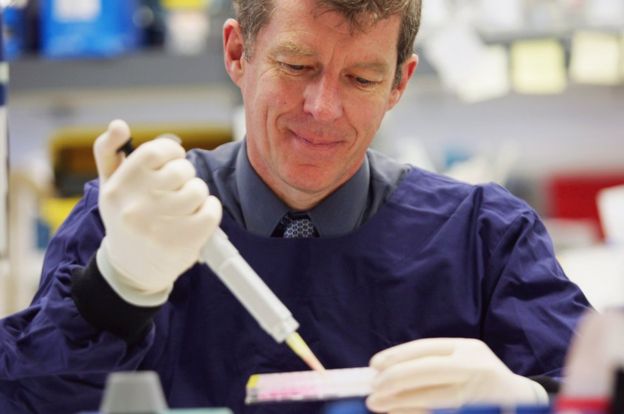

Professor Ian Frazer at work in a hospital laboratory

https://www.nytimes.com/2017/07/31/well/no-crying-over-dry-eyes.html This is an article from the NYT about the perils of "dry eye" also known as keratoconjunctivitis sicca, which sounds more serious. Eye drops, sold over the counter, are mainly methylcellulose, but they prevent burning and protect the eye after sun exposure and long hours at the computer. Which brings up the functions of tears, the components of which include 1,500 proteins (who knew?). I'm going to start using my eyedrops today.


https://www.nytimes.com/2017/07/31/science/dogs-shelters-adoption-behavior-tests.html  This is an article from the NYT about the unreliability of dog obedience testing trials which determine whether the shelter dog is euthenized as a danger to people. Personal note: I adopted a shelter dog newly returned by the adopters after clamping its mouth (no blood) on a child's hand. The dog did nip a couple of people in the twelve years we had her (who were entering out house) but certainly would have been euthenized.  There is serious scrutiny being given the shelter tests which are now regarded as poor predictors of whether the dog will be violent since one of the false negatives (negatives can be considered worse for people than false positives because the positives are killed) resulted in a death. One of the points made in the article relates to the shelter environment itself as evoking aggression. One test of dog-on-dog aggression showed that dogs reacted more aggressively to a fake dog than a real one. Shelter staff could carefully observe the interactions between the dog and other dogs and shelter employees in order to make the life-or-death decision.


https://www.nytimes.com/2017/08/02/opinion/fda-smoking-nicotine.html This is an op-ed piece by Robert Proctor, a science historian, about nicotine addiction.A fascinating statistic: if the rate of present consumption of cigarettes continues until 2015, 17 million more Americans will die of tobacco-related illnesses. I wonder what the statistic would be if if no one smoked any more cigarettes. I always wondered why nicotine in consumables wasn't made illegal (tobacco lobby) and this article answered my (naive) question. The FDA is barred from requiring the removal of nicotine from cigarettes but they can mandate the reduction by 99%, so they are minimally, or non- addictive. The Goldilocks optimum is between 1 and 2 percent, by weight, which is addictive. Reducing by a factor if ten would make it very difficult for cigarettes to become addictive, and, if addiction did result, not hard to quit.

http://abcnews.go.com/Technology/wireStory/scientists-id-tiny-prehistoric-sea-worm-50-head-49013050 This is a piece from abc news about a report in Current Biology about the identification of the 4 inch long capinatator praetermissus fossil from the Cambrian explosion about 541 milliuon years ago. Scientists say these fossils are so different from any previously found that they represent not only a new species but a new genus, a grouping larger than species. It is an ancestor  of the worm grouping called arrow worms, which are abundant in the world's oceans.
In this illustration by Marianne Collins/Royal Ontario Museum shows a Capinatator praetermissus. Long before dinosaurs roamed the Earth, a bizarre creature swam the seas, a miniaturized prequel of “Jaws.” The Capinatator didn’t even have a face. Inst

https://www.nytimes.com/2017/08/02/science/gene-editing-human-embryos.html  This is a report from the NYT of a Nature  report on the use of a novel gene editing technique to remove a deleterious mutated gene from a human embryo. As used in the genetic engineering of human beings, this technique has received widespread scrutiny as it may lead to a new type of eugenics, in which people would pay for the inclusion of certain culturally valued traits and the exclusion of less valued ones. Scientists at the Oregon Health and Science Institute along with colleagues successfully fixed a mutation that affected the heart and leads to sudden death.


https://www.nytimes.com/2017/08/07/health/atheists-religion-study.html?_r=0 A report in the NYT about a study published in Nature Human Behavior about people's beliefs about religion. People were given a questionnaire asking them to indicate their religion (or lack thereof) and, given a description of a sociopath with gory criminal details provided, asked whether this person was religious or non. Overwhelmingly, most people chose "non." This is contrary to the actual religious affiliations of serial killers who have been studied, who are sometimes religious believers and sometimes not.


https://www.nytimes.com/2017/08/07/climate/climate-change-drastic-warming-trump.html The NYT obtained a copy of a climate change report saying the average US temperature has risen steeply since 1980, directly contradicting the assurances of President Trump and his cabinet. The report is a special section of the National Climate Assessment and the National Academy of Sciences has signed off on it but the president hasn't viewed it, or agreed to release it yet. A small difference in the global temperature makes a big difference. "The difference between a rise in global temperatures of 1.5 degrees Celsius and one of 2 degrees Celsius, for example, could mean longer heat waves, more intense rainstorms and the faster disintegration of coral reefs."


http://www.ledger-enquirer.com/news/business/article165833912.html This is an article from the inquirer about the attempt by the Army Corps of Engineers to keep an invasive species of carp out of the Great Lakes.  I have just completed a book called "The Life and Death of the Great Lakes" on the subject. The Asian carp abounds in the Mississippi and its tributaries but it would not take much to breach the barrier into the Great Lakes. The plan to restrict the invading fish includes technologies such as underwater noisemakers, electronic dispersal barriers (the book said that they already have the latter) and a new lock, costing $275 million. These measures would protect the Great Lakes fishing industry.

https://www.forbes.com/sites/judystone/2017/08/06/germs-on-your-kitchen-sponge-get-a-grip/#6cf94fb9746e This is an article from Forbes in response to a study publicized by the NYT cautioning people about the germs in their sponges. Forbes finds that the few microorganisms that survive sterilization  recolonize the sponges. One of the bacteria, Acinetobacter, causes infections in people who are in the ICU. There was no salmonella or campylobacter or other organisms that cauxe food poisoning. Conclusion: if you want to worry about catching an infection from an object: worry about your cell phone. In a study of 200 hospital workers, 95% of the phones carried nosocomial (hospital-acquired) infections, including MRSA.


https://www.nytimes.com/2017/08/09/science/dinosaurs-flying-mammals-squirrels.html?_r=0 Article by Carl Zimmer in the NYT reporting a Nature study of flying mammals in the Mesozoic, the Age of Dinosaurs, done at the University of Chicago.  In the 1990's paleontologists found entire fossils of mammalian skeletons containing even impressions of skin and hair. These and other newly found fossils allow scientists to draw in previously unknown branches of the mammal family tree. One skeleton, Volaticotherium, appears to have been able to fly.


https://www.nytimes.com/2017/08/10/health/gene-editing-pigs-organ-transplants.html  A report in the NYT of a Science publication about the increasing possibility of using pig organs in human transplantation. Piglets were created that had human organs with their DNA edited to remove diseases, like the pig version of the HIV virus and other retroviruses, that could be transferred to the human recipients of the transplants. This is an important development and carries forward the treatment of diabetes patients with pig pancreas cells and heart valves from pigs rescue heart disease sufferers. Animal rights activists should not be more concerned than they are with the many pigs raised for the human diet.

Sunday, July 9, 2017

In July

http://blogs.plos.org/scied/2017/06/28/the-trivialization-of-science-education/ This is a blog entry by Mike Klymkowsky about the trivialization of science education. Klymkowsky, a professor at the University of Colorado- Boulder, revs up the large engines including Socrates and Richard Feynman in his plaint about the abdication by colleges of their role in students' science literacy. Since most colleges and universities do require non-majors to take at least one science course with associated lab, does this requirement build in students a scientific vocabulary and understanding of methodology in order to approach and evaluate scientific issues critically? The fact that it does not has serious consequences to meaningful, as opposed to pretend, learning.


http://www.philly.com/philly/opinion/20170710_Poor_math_skills_lead_to_bad_politics_and_policy.html  This is an opinion piece from the Philadelphia Inquirer about math illiteracy. in 2003, the National Assessment of Adult Literacy  calculated that 1 in 5 Americans couldn't compute their weekly paycheck or a restaurant tip. The opinion piece suggests that the fact that our technologies can help us with some of these things makes us even more math-illiterate. The 2 million dollar error in the 2018 budget submitted by OMB is an example.


https://www.nih.gov/news-events/news-releases/scientists-replay-movie-encoded-dna
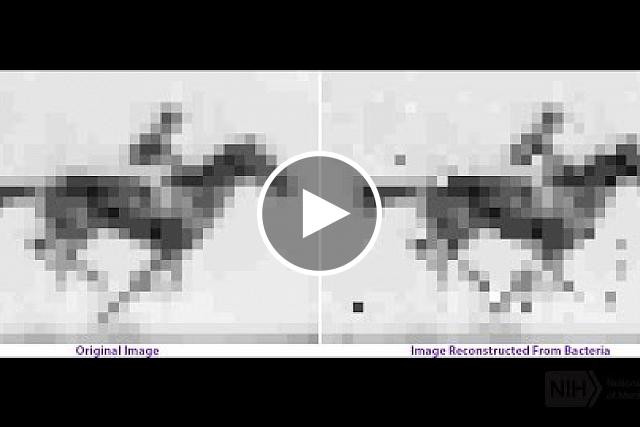
OK so I don't really understand this. This is a link to an NIH news release about a movie encoded in and played from human cells. In a report featured in this week's Nature, Seth Shipman and his group were able to insert into bacterial cells and retrieve from the cells the image of a human hand. After doing this they inserted one frame at a time into bacteria 5 frames of translated DNA of a racehorse in motion movie and then they sequenced the DNA to reconstruct the movie. They intend to use the DNA as a "molecular recorder" to study the brain.
For the first time, a primitive movie has been encoded in – and then played back from – DNA in living cells. Scientists funded by the National Institutes of Health say it is a major step toward a “molecular recorder” that may someday make it possible to get read-outs, for example, of the changing internal states of neurons as they develop. Neuroscientist Seth Shipman, Ph.D., of Harvard Medical School, explains the study.

https://www.washingtonpost.com/news/speaking-of-science/wp/2017/07/13/human-evolutions-biggest-problems/?utm_term=.a9a227f64517 This is a position piece from the Washington Post about Trump's explanation, written with a ghostwriter, of how high-status males with "kick-ass attitudes" (like Trump) "who didn't give a crap about what other people in the tribe thought" were able to have "top models" and the most beautiful women. The writer makes the point that "prosociality", caring about the tribe, enabled Trump's ancestors to survive. Trump also says that this is how it always was and will be but the writer again corrects him that nothing about evolution "always was and always will be", since evolution is not static.

https://www.nytimes.com/2017/07/12/well/move/high-intensity-workouts-may-be-good-at-any-age.html This is an article from the Well Column about how short, high intensity workouts (called interval training) are good for any age. This new study reported in the blog centers on older organisms. Mice equivalent to over 65 in human life span were "coaxed" through interval training (little treadmills). The mice that had done the interval study were in some ways "younger" than at the beginning of the trial. They had greater endurance and more muscle mass than the control animals.


http://www.latimes.com/science/sciencenow/la-sci-sn-larson-ice-sheet-20170713-htmlstory.html An article from the LATimes about the loss of an iceberg the size of the state of Delaware in Antarctica's Larsen C Ice Shelf. But a UCIrvine glaciologist reports that this is only the beginning. This collapse could possibly lead to the loss of the entire shelf, which may be decades away.


https://www.nytimes.com/2017/07/14/nyregion/seabird-deaths-long-island.html This article in the NYT is about an observation by a wildlife pathologist from the NY Department of Conservation about a type of shorebird that has been found dead on LI beaches in increasing numbers, an unusual observation. The great shearwaters nest on the of the world's most remote islands in the south Altantic before migrating to the waters off New England and Newfoundland. The bird carcasses, when autopsied, were thin and anemic, which leaves the question: why is their health so poor? Since these birds are very rarely seen, gliding up the Gulf Stream, and, after feeding in the Caribbean, passing Long Island, why were they off course? Possibly winds forced the birds over land.


https://www.nytimes.com/2017/07/17/health/india-south-asia-castes-genetics-diseases.html?_r=0 This is a NYT article reporting from a Nature Genetics publication about residents of Andhra Pradesh and Telangana in South Asia who can die if administered muscle relaxants due to a mutation in their DNA. An analysis of 2,800 people belonging to 260 South Asian groups showed 81 groups that had lost genetic variation more extreme than Ashkenazi Jews and Finns due to genetic isolation and interbreeding. This lack of genetic variation is due to what is called the founder effect, when a population expands from a small group of founders with resultant genetic similarities which can cause a high incidence of the inheritance of rare diseases.


https://www.nytimes.com/2017/07/11/well/live/the-gentler-symptoms-of-dying.html A NYT article about how organ failure, preceding death, shuts the brain down. Each of the major organs, according to the physician reporter, has the ability to shut the brain down, evoking symptoms not as readily discernible to a witness as the classic death rattle. The exception is "terminal lucidity", as described by biologist Michael Nahm, in which case there is a brief state of clarity preceding death.


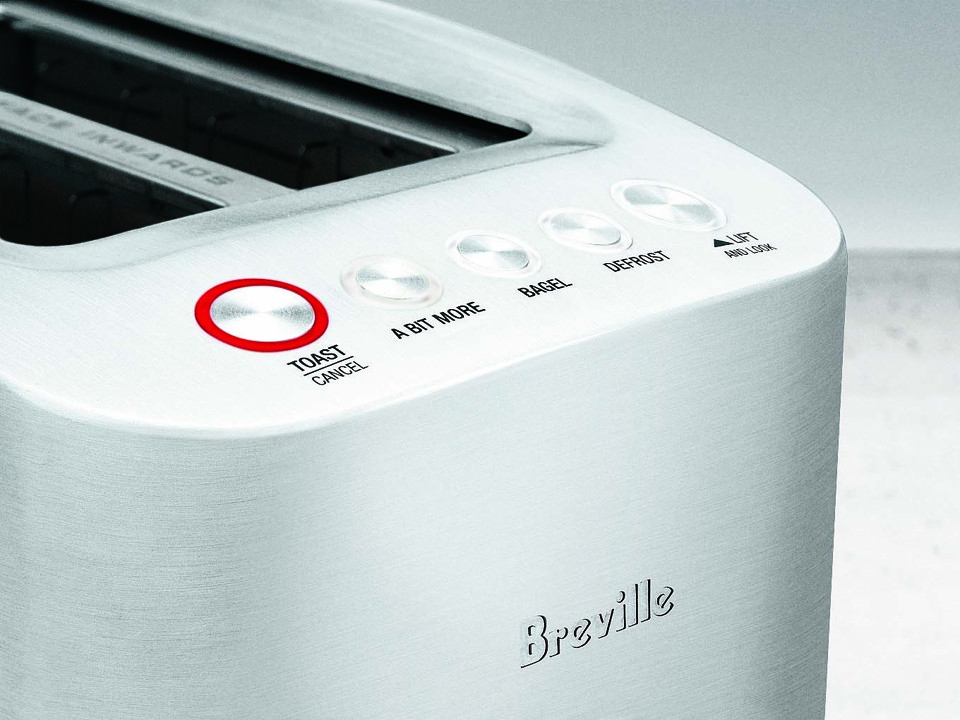
https://www.theatlantic.com/technology/archive/2017/07/toaster-a-bit-more-button/534312/ From the Atlantic, a paean to the Breville toaster. The writer says that this device makes toasting bread "more quantitative".  He references the "a bit more" button, which allows the bread to raise up and have its degree-of-toastness appreciated.  This design element is part of the new culture which responds to the user experience, or "UX". To follow: coffins (just kidding.)
A Breville toaster with the "A Bit More" button

Sunday, June 25, 2017

Blogging from Medford, Mass

https://www.nytimes.com/2017/06/23/world/europe/turkey-evolution-high-school-curriculum.html?_r=0  This is an article from the NYT about the decision of the Turkish government, known to be secular in character, to remove the teaching of evolution from the ninth grade science curriculum, ostensibly because of "controversy". This can be interpreted as a bow to Erdogan's fundamentalist opposition. The teachers' union is against this drastic decision.


https://www.nytimes.com/2017/06/21/well/live/fish-as-medicine-for-rheumatoid-arthritis.html
From the Wellness blog of the NYT an article about an observational study published in Arthritis Care and Research documenting the effect of consumption of various types of non-fried fish on rheumatoid arthritis. Them magnitude of the effect, according to the blog, was equivalent to one-third of the standard drug (methotrexate) treatment.

https://www.nytimes.com/2017/07/07/nyregion/a-forest-floats-on-the-bronx-river-with-free-produce.html?_r=0  This is an article from the NYT about circumventing rules about foraging on public land by offering produce to all comers because this barge in a South Bronx forest, yielding blueberries, onions and wild carrots, is on the river. Swale is the name of the floating forest project that defies the NYC ordinance against cutting or removing or defacing public trees, plants or flowers with destruction of public property.

Monday, May 15, 2017

This Blog Motivates Me...

https://www.nytimes.com/2017/05/13/technology/google-education-chromebooks-schools.html  This is an article from the NYT about the encroachment of Google Schools into the classroom. "Today, more than half the nation’s primary- and secondary-school students — more than 30 million children — use Google education apps like Gmail and Docs, the company said." According to the article this has lead to the emphasis of certain skills in the classroom, such as teamwork and problem solving, while de-emphasizing more traditional skills such as the learning of math formulas. Parents are concerned by the urging of seniors to convert their school email accounts to GMail, with the potential for using the students personal information for marketing.


https://www.nytimes.com/2017/05/12/world/americas/dinosaur-fossil-nodosaur-alberta-oil-sands.html This is an article in the NYT about a mine in Alberta which has yielded a dinosaur "mummy, 110 million years old. The "mummy", the best preserved specimen of its kind, was found by a shovel operator at  the Millennium Mine. It was photographed for The National Geographic.


https://www.sciencenews.org/article/yes-statins-protect-hearts-critics-question-their-expanding-use This is an article from Science News about the expanding use of the statins and its risks. Statins were discovered in the fermented broth of rice mold that blocks the enzyme action of HMG-CoA reductase, which lead to a discovery of a related compound by Merck which lead to Lovastatin and the rest is history, or rather, pharmacology.  The CTT trials in 1994 revealed other benefits from taking statins. There are downsides, such as effects on muscle (Baycol was removed from the market). A 2008 study in NEJM pointed out that more people developed Type II Diabetes if they took a statin than those who did not.Observational data following real-world data reveal side effects worse than the CTT study; more muscle pain in those taking statins (JAMA) compared with those taking placebo.


illustration of man with umbrella under raining statins

https://www.nytimes.com/2017/05/15/health/immune-system-drugs-monoclonal-antibodies.html?_r=0  This is an article from the NYT about a study in NEJM about resistance developing to drugs. Many frontline therapeutics are monoclonal antibodies, which are proteins, and the body's immune system can make antibodies which react with the drugs making them inactive against their targets. Pfizer had a drug in clinical trials that reduced cholesterol but had to be pulled due to patients' lack of response because of antibodies to the drug.


http://www.nationalgeographic.com/magazine/2017/06/dinosaur-nodosaur-fossil-discovery/ This is an article from Nat'l Geographic about the newly discovered Canadian nodosaur dinosaur fossil in Millenium Mine. The level of fossilization (it is a whole fossil) was produced by its rapid undersea burial. In most cases, as it describes in the article, it is rare that minerals replace soft tissues before they rot. The nodosaur is a type of Ankylosaur.
Picture of an man chiseling free a fossil under a spotlight in a dark lab

http://www.philly.com/philly/health/health-news/Dogs-Lyme-disease-ticks-sentinel-warning-humans-vet.html An article in Philly Inq. about how dogs can be used as indicators whither Lyme will be found next in humans. Although we don't catch Lyme from dogs, the tick bites humans and dogs from the tall grass where it lives. Since there is no foolproof blood test for Lyme and it is difficult to diagnose, modeling animal disease can help determine whether Lyme might be in the area. This study was done by North Carolina State U and is published in PLOSONE.
 http://media.philly.com/images/1200*800/05-17-Lyme-Map.gif

 https://www.nytimes.com/2017/05/16/health/ivg-reproductive-technology.html  Article in NYT about the possible use of skin cells to produce babies, also known as in vitro gametogenesis. Researchers have published in Science Translational Medicine their objections to the implications for humans of this work which could potential produce babies from one parent.  Last year, researchers in Japan used IVG to make viable eggs from the skin cells of adult female mice, and produced embryos that were implanted into female mice, who then gave birth to healthy babies.


http://www.philly.com/philly/health/science/philly-museums-fossil-surgeon-reveals-ancient-past-20170519.html  This is an article from the Philly Inquirer about Fred Mullison of the Academy of Natural Sciences, a fossil surgeon who has built a cast of Tiktaalik Roseae from the Canadian Arctic. The fossil preparator was formerly a commercial photographer. Tiktaalik roseae, which resembles a fish, has muscular fins that allowed it to wriggle onto land for short stretches.

HE1FOSSIL16-AHE1FOSSIL16-A

https://www.nytimes.com/2017/05/20/opinion/sunday/donald-trump-vs-womens-health.html?_r=0 This is an article from the Sunday Review of the NYT about the problems of throwing people off of health insurance and cervical cancer. The US has one of the lowest cervical cancer survival rates in the developed world and is preventable. Trump is linking funding of some organizations that provide cervical cancer screening to their support and support for abortion so the problem of cervical cancer low survival numbers will increase.


https://www.nytimes.com/2017/05/19/opinion/sunday/you-still-need-your-brain.html Also from the Sunday Review an article about the Googlization of reading. The brain is better than Google in determining context which is provided by one's memory but not internet dictionaries. Also, memorization is quicker than looking up things, like equations, on the internet. The brain beats the internet in terms of speed and context but the internet bests the brain in terms of volume.


https://www.nytimes.com/interactive/2017/05/18/climate/antarctica-ice-melt-climate-change.html This is a report from the NYT from above the Ross Sea in Antarctica.  Billions of tons of ice every year move from the land to the sea, which was thought to be immutable. But, according to this article, scientists fear that parts of the Antarctic ice sheet may be in the stages of an "unstoppable disintegration." This disintegration could result in the need for millions of coastal refugees to flee their homes for safety inland.
frearson3.jpg

http://time.com/4784029/ebola-outbreak-congo/ This is an article about a new outbreak of Ebola virus in the Congo. Due to a conflict in the Central African Republic and the remoteness of the area of the outbreak, it is difficult for WHO workers to respond to the cases and it make take weeks to begin treatment of those affected.


Hygienists wearing protective suits disinfect the toilets of the Ebola treatment centre in Lokolia, on October 5, 2014.

https://www.nytimes.com/2017/05/19/climate/trump-epa-budget-superfund.html  Article about 2018 budget cuts at EPA which would reduce by 40% the funding for EPA employees involved in developing and overseeing environmental regulations and 25% the Superfund cleanup funds.The budget would also eliminate funding on twelve state-run programs to protect watersheds, including the Chesapeake Bay.


https://www.nytimes.com/2017/05/21/health/sodium-bicarbonate-solution-critical-shortage-hospitals.html?_r=0 This is a NYT article about the shortage of sodium bicarbonate, found in most kitchens but also a necessary ingredient for open heart surgery.  Pfizer, the main supplier, shifted its distribution location but now its own suppliers are also running low. They attribute the shortage, which is causing surgeries to be postponed, to "a confluence of factors."


https://www.nytimes.com/2017/05/22/well/family/pediatricians-say-no-fruit-juice-in-childs-first-year.html An article in the journal Pediatrics is recommending that children under the first year of life not be given fruit juice and furthermore that only four ounces of juice be given to one-to-three year olds. The idea is that consumption of fruit juice may cause babies to cut down on formula or breast milk, which are a preferred source of protein, fat, vitamins, minerals and calories. Parents are informed that whole fruit is preferable to juice and is a better source of fiber than juice. It is not certain whether the next U.S.D.A. guidance will forbid juice for infants based on these recommendations. But an agriculture department spokesman says that for the first time the very young will be included in the 2020 guidelines.

Wednesday, May 10, 2017

Tuesday Afternoon Massacre

https://www.nytimes.com/2017/05/08/climate/alaska-carbon-dioxide-co2-tundra.html?_r=0 This is an article from the NYT about a Harvard study published in the Proceedings of the National Academy of Sciences of the carbon emissions from the North Slope tundra of Alaska showing that the carbon emissions have increased 70% since the 1970s. The "greening of the Arctic" is occurring as temperatures rise globally but also the study shows that by delaying freeze-up this warming trend also allows the processes that release carbon dioxide to continue longer.


https://www.nytimes.com/2017/05/08/nyregion/dead-rivers-closed-beaches-an-acute-water-crisis-on-long-island.html An article from the NYT about the water crisis on Long Island and the water quality in the Great South Bay. Suffolk County has fewer houses using sewers than Nassau County to the west. A sewer was built for Babylon and parts of Islip but was so mired in corruption that other municipalities have not followed suit. There are algal blooms in the Great South Bay and the shellfish industry has fallen more than 90% since 1980. Homeowners are advised to invest in denitrification systems.


https://www.usnews.com/news/business/articles/2017-05-09/study-side-effects-emerge-after-approval-for-many-us-drugs This is an article in USNews about site effects that have emerged after drug approval by the FDA. This study was published in JAMA and reviewed 222 prescription drugs approved by the FDA from 2000 to 2010.   71 flagged drugs caused reactions from serious skin reactions, liver damage, cancer and even death. These had all pass clinical trials for safety but possibly were not tested for a long enough interval.


The Associated Press

https://www.nytimes.com/2017/05/10/health/brain-defect-gut-bacteria-microbiome.html?_r=0 Article from NYT about a study published in Nature about a brain disease that has been linked to a gut microbe. Hereditary cerebral cavernous malformations cause bubbles in the brain which can burst, causing a brain hemorrhage and death. Manipulating the microbiome of newborns with a fecal transplant may provide a cure.


https://www.nytimes.com/2017/05/12/health/new-gene-tests-pose-a-threat-to-insurers.html This is an article from the NYT Business section about people who are using 23andMe genetic testing kits to find out whether they have the ApoE4 and therefore are possible candidates for Alzheimers Disease. This revelation of their genetic propensity towards AD is enough to make them purchase the expensive Long Term Care Insurance. 23andMe promises not to reveal the results to insurance companies but if everyone who finds out about their genetic risks buys these policies and those with no such risk do not, paying out could be a crisis for the companies.


https://www.nytimes.com/2017/05/12/nyregion/exotic-animal-hospital.html This is an article about NY's only exotic pet hospital. They do not see cats and dogs. The article spotlights a duck with reproductive problems. The veterinarian had previously removed the duck's reproductive tract but somehow she kept laying eggs. She required $1,200 in reproductive surgery.


https://www.nytimes.com/2017/05/08/health/salt-health-effects.html?_r=0 An article in the BYT about two studies done on Russian cosmonauts published in the Journal of Clinical Investigation that determined that eating salt made one less thirsty and a further study that mice burned more calories when they consumed more salt. A theory from one of the observations was that the body produced more water with a higher sodium intake, possibly due to the effects of glucocorticoid hormones.

Sunday, April 30, 2017

Climate Change Protest March

http://www.philly.com/philly/health/cancer/Promising-therapy-for-rare-eye-cancer-raises-hopes-for-targeting-other-cancers.html This is an article from the Philadelphia Inquirer about a novel, light-activated drug for melanoma that affects the eyes. The drug is coupled with a light sensitive dye that is activated by laser light.

hs1eyecancer30-b-24042017-0005

https://www.nytimes.com/2017/04/29/world/europe/leeches-russia-medicine.html An article from the NYT about the uses of leeches in medicine. In the US, the FDA has licensed the use of leecges to remove excess blood from severed body parts that have been re-attached. In Russia they are used as a preventative for stroke and heart disease. Leech venom is a natural anticoagulant.


https://www.usatoday.com/story/news/politics/2017/04/29/epa-removes-climate-change-data-other-scientific-information-website/101072040/  From USA today a report that the EPA is removing its climate change data from its website with a view towards "reflecting the views of the leadership of the agency."


http://www.philly.com/philly/health/health-news/Five-Questions-about-blue-light-smartphones-ipads-iphones-sleep-optometric.html This is an article from the Inquirer about eye problems associated with excessive exposure to light in the blue range from computers and other devices. Concerns are about the propensity of excessive exposure to blue light causing eye strain, blurred vision, dry eyes. A survey by the American Optometric Association reveals that although 88% of Americans are aware of the fact that their vision can be harmed by the overuse use of these devices, they keep using them. To quote from the article, "The AOA has several recommendations.  First of all, the association urges patients to follow the 20-20-20 rule.  When you’re looking at a screen, take a 20-second break and look at something at least 20 feet away every 20 minutes."
iStock_laptop-3x2


https://www.nytimes.com/2017/05/03/sports/want-to-make-more-baskets-science-has-the-answer.html?_r=0 This is an article from the NYT about throwing more accurately. A paper published in Royal Society Open Science discusses the trade-off between throwing fast and throwing accurately and concludes that  throwing fast makes it harder to release the object at just the right moment. But, the study additionally concludes that the ball release speed affects the curvature of the path that the ball takes. The conclusions were based on mathematical modeling.


 https://www.nytimes.com/2017/04/24/well/family/fending-off-math-anxiety.html This is an opinion by Perry Klass about math anxiety in children. The doctor opines that, in order to instill number confidence in children it is important that early math skills be developed by parents talking to their children about numbers early in life much as  they introduce their children to letters and the alphabet as a preliminary to learning to read.  There is a program called "Bedtime Math" an app that presents short numerical problems to children. A 2015 study determined that children's math skilled improved if their parents used this program with them compared to a control group.


https://www.nytimes.com/2017/05/01/health/artificial-nose-scent-disease.html  From the NYT an article about a company called Owlstone, which manufactures chemical sensors. Although the company originated with the purpose of detecting chemical weapons and explosive, the focus has shifted to medical sensors, specifically cancer detection. They are currently conducting a trial with the University of Warwick, to detect colon cancer from urine samples.

https://www.nytimes.com/2017/05/07/us/politics/epa-dismisses-members-of-major-scientific-review-board.html?_r=0 An article from the NYT about the dismissal of at least 5 members of a major scientific review board which advised the EPA. Scott Pruitt intends for the EPA to become much more lenient towards the coal industry, contradicting the recommendations of both of the EPA;s scientific review boards. Both of the review boards have been the subjects of political attacks. A Republican senator from Texas says that the advisors will be replaced with members from "the business world."


https://www.scientificamerican.com/article/aspirin-may-prevent-cancer-from-spreading-new-research-shows/ This is an article in the SciAm about aspirin's actions in preventing malignancies. work done at Brigham and Women's Hospital has shown that platelets help malignant cells to spread and that cancer cells use platelets to hide from the immune system. Aspirin is able to "re-wire" megakaryocytes (progenitor cells of platelets) to turn of genes that allow platelets to camouflage cancer cells. This latter work was done at Duke University.


http://www.samefacts.com/2017/05/energy-the-environment/the-wall-street-cherry-picking-festival/ Here is a column called "The Wall Street Cherry-Picking Festival" about the second column by Bret Stephens, the "climate confusionist" hired by the NYT. The blogger criticizes the Times columnist for picking the only year in a data trend showing emissions in Germany that was an outlier, when emissions fell. The blog shows the comparable data chart for US, which show the same decrease for the year in question.


https://www.nytimes.com/2017/05/04/science/julius-youngner-dead-salk-polio-vaccine-researcher.html?_r=0 An obit in the NYT for Julius Youngner, co-inventor with Jonas Salk, of the polio vaccine. These early immunologists were really heroes.


hs1eyecancer30-b-24042017-0005