Wednesday, July 29, 2020

It Takes a Pandemic to Raise a Child

https://www.nytimes.com/2020/07/24/nyregion/climate-change-nyc.html
This is a NYT article about the effect of increased temperatures in the metro area on the number of new species. NYC, once classified as a humid subtropical climate, has achieved the distinction of residing in the humid continental category, summers averaging above 72 degrees F and winters above 27, on average. Forget about wrapping your fruit trees in burlap in the winter, for example, not that I have ever done this. Enjoy one of the 15 sultry tropical nights every summer when temperatures stay above 75: it used to be 10. The article doesn't suggest growing palmetto palms in Central Park: Georgia, Florida and South Carolina still retain that distinction. The downside is that invasive weeds, such as knotweed and porcelain berry are running rampant. In the fauna department, bugs that died off in the winter are surviving and multiplying, such as the hemlock woolly adelgid.


https://www.sciencemag.org/news/2020/07/scientists-pull-living-microbes-100-million-years-beneath-sea
Here is a Science magazine article, which I would subtitle, "So you think you have sleep issues?"
It describes 100 million year old microbes which, when brought back to the lab, revived and multiplied. A geomicrobiologist at the Japan Institute for Marine Earth Science and Technology launched a drilling expedition at a site in Australia, at a confluence of ocean currents that is considered the deadest part of the world's oceans. They extracted samples from the mud cores and fed them with nitrogen and carbon compounds. There were 100x fewer samples than in ordinary sea mud and they had to develop special techniques to analyze the small numbers of cells. In terms of geological time, this is very impressive.


https://www.nytimes.com/2020/07/28/health/alzheimers-blood-test.html A NYT article to remind people that non-Covid research continues. although there might be some advantage to our forgetting at least the first half of 2020. Looking for diagnostic tests for AD has been proceeding apace for years. This is a great result. The test can distinguish whether people with dementia had Alzheimer’s instead of another condition. And can identify signs of the degenerative, deadly disease 20 years before memory and thinking problems are expected in people with a genetic mutation that causes Alzheimer’s. The test is inexpensive and should be available in 2-3 years. This research was published in JAMA.

Wednesday, July 8, 2020

Black Deaths Matter

https://www.nytimes.com/2020/07/02/health/santillana-coronavirus-model-forecast.html
This is a NYT article about using social media to predict outbreaks. An international team of scientists has developed an algorithm that could be predictive and get a two0week head start from Twitter, Google searches and mobility data from smartphones that would guide whether to relax or ramp up public health interventions. This is from a prepub from arXiv.org and the commentary is by the director of Machine Intelligence Lab at Boston Children's Hospital. With the caveat that the Google Flu Trends Algorithm from 2008 didn't work as expected but researchers have made adjustments to the program combining Google searches with other kinds of data. It is called a "harmonized" algorithm because it weights the data sources depending on how strongly it correlated to a coming increase in cases.


https://www.nytimes.com/2020/07/02/opinion/coronavirus-jail.html
This is a commentary from an anthropology  Ph.D. candidate and medical student about the increase in the number of Covid-19 cases in jails. His research deals with the Cook County (Chicago) jails and was published in the Journal of Health Affairs (not a premier journal from the sound of the title). The study showed that "the cycle of arrests, jailings and releases was the most significant predictor of the spread of the coronavirus in Chicago and the rest of Illinois." A sixth of all of the cases in the city and state were linked to people who jailed and released from a single prison, according to data through April 19th. Nonviolent offenses account for 95% of the more than 10 million arrests in America every year. The conclusion from this data is that standard policing and incarceration policies are driving preventable spread of the virus. People are being released from prison daily with the belief they are negative  when in reality the virus has begun to spread in their bodies.  The authors suggest that policymakers should stop the daily cycling of thousands of people in and out of jails. During the pandemic issues of criminal justice reform should not be determined by partisan politics.


https://www.nytimes.com/2020/06/30/upshot/coronavirus-economists-dexamethasone.html
This is the Upshot and a discussion of the Recovery trial, a randomized controlled trial in Britain. It showed that natural experiments, such as when a shortage of one particular drug that was used to treat sepsis gave scientists the unique ability to assess the effects of the drug on mortality rates. Apparently, natural experiments allow a more causal interpretation of data, while associational studies, typical in medicine, do not.  This points out the sometimes-abritary clinical cutoffs made to allocate particular treatments. For example, a hospital decides whether to provide a ventilator to patients based on whether they use 6 liters of oxygen per minute, but actually a 5-liter-per minute patient is pretty much the same. The commentary suggests that these questions must be asked and  thresholds must be known and interrogated. Differences in treatment around the threshold must be examined to see whether they correspond to differences in clinical outcomes. In terms of the Recovery trial, after the results were announced, the data for critically ill Covid-19 patients were examined, with the expectation that patients hospitalized before the Recovery trail results were announced would fare worse than those hospitalized in the days afterward, assuming that doctors started using DEXA.


https://www.nytimes.com/2020/07/14/us/politics/trump-cdc-coronavirus.html
Article in NYT detailing the  protracted rape of the CDC by the administration. So the HHS is now being tasked with collecting daily reports about the patients that each hospital is treating, number of available beds/ventilators, and other information vital to tracking the pandemic. S'posed to make it easier for decisions about allocating short-supply items like remdesivir, but in all likelihood this new policy will make it hard to access new information not open to the public, potentially affecting the work of scores of researchers, modelers and health officials who rely on data formerly sent to the CDC to make projections and crucial decisions. Just another "trump" in the road. Will this also be true of the Weather Bureau, the US Geological Service, NASA, FDA? Will the federal government be hiring new data "remodelers" trained to suppress information? What will be their civil service grades?


https://www.statnews.com/2020/07/16/hospital-data-reporting-covid-19/

This is from StatNews about an alarming new change in the way real-time Covid-19 data is reported. Accurate and timely reporting of data informs stop-on-a-dime policy changes. Covid-19 data,rather than being reported to CDC and HHS is now only being reported to the HHS, leading to concerns that the data would be eliminated, manipulated, falsified or all three. The rationale is data consolidation in order to make decisions about allocation of scarce resources, such as remdesivir.  “In the midst of the worst public health crisis in a century, it is counter-productive to create a new mechanism which will be extremely complicated to build and implement,” public health officials, including former CDC director Tom Frieden, wrote.  The data is openly available on the CDC’s website and allows some of the most consulted Covid-19 tracking sites, like covidexitstrategy.org, to provide numbers on how many hospital beds hospitals are open in different states.


Thursday, July 2, 2020

Real men wear masks

https://science.sciencemag.org/content/368/6498/1414
This is a science mag article about our favorite whipping boy and my former employer, ETS.  As bad luck would have it, just when unis are thinking of not requiring the GREs, along comes Covid-19, requiring tests to be administered online. According to Science, the specifications for students who take the online GREs include being alone in a room, having a computer with a webcam, having a whiteboard if they take notes, sitting in a standard, not overstuffed chair, and ensuring no one will enter the room for the entire 3 hours. How hard/easy is this? I read about a school that had to set up a hotspot in a school bus so the profs could get the internet for teaching. We are talking about high school students here. For schools that had been considering disconnecting from the GRE as a requirement for graduate school. Covid-19 may be the camel's-back-breaker. Good riddance to high stakes testing. There is proctoring software (examsoft) that universities make available for giving exams but probably also a readily available-to-students industry for getting around it.

Monday, June 29, 2020

A Walk in the Park


https://www.nytimes.com/2020/06/27/opinion/prison-coronavirus.html
This is a link to a Sunday Review (NYT) article from a former prisoner in Ohio, who has since been released. He remarks on the prison's overcrowding, poor sanitation arrangements (8 showers for 160 inmates), proximity of bunks, among other complaints. Parole hearings were delayed and law libraries closed due to health concerns, at least this was the reason offered. Mealtimes were staggered to have fewer inmates dining than regular practice, which required dinners to be offered to some as late as 8PM. Masks were offered to prisoners but some corrections officers refused to wear them. I saw a broadcast in which one state's governor, when confronted by the concerning statistics about prison infections, reassured the public that the prison is a "closed system", which it is not by any means. Prisoners in the state the governor was from were kept in solitary upon diagnosis. And, how would the threat of solitary confinement encourage reporting of symptoms? Reduce the prison population: it is too severe a penalty to die of Covid-19 as punishment for a parole violation, non-violent crime or first offense. Some of the prisoners I saw at Southwoods were elderly and in wheel chairs.  The correctional system's system's chaotic and ill-thought out response makes as little sense as the public health philosophy guiding the nation's response to the virus.


https://science.sciencemag.org/content/368/6497/1317/tab-pdf
This is a link to a Science mag article about the gender gap in STEM fields. The research was done at Dept of Applied Statistics, Social Sciences and Humanities at NYU. Male to female ratios in US college majors in Bio, Chem, Math and other STEM fields as 1:1, while Physics, Engineering and Technology ratios are 4:1. But they take it further to show that low achieving males (high school) major in the latter fields  (PECS)  at a higher rate than the same-achieving females.  Prior research has shown that females have less confidence in their math abilities, value societal goals and a work-life balance more than salary, take different high school STEM classes and have different career aspirations.  Their model took into account both high achieving and low achieving students and comes up with analyses. Interestingly, of students not intending to major in PECS in high school, males are more likely to major in PECS than females. They conclude that, interventions such as coding camps, role models and peer networks to encourage PECS majoring in college, may work for only a select group of high-achieving women and that "to raise the quality of students in PECS, it must be recognized that the gender imbalance varies through the achievement distribution and is  perpetuated by male-favoring cultures that disproportionately attract low achieving men to the fields."
 
https://www.theguardian.com/world/2020/jun/30/new-swine-flu-with-pandemic-potential-identified-by-china-researchers
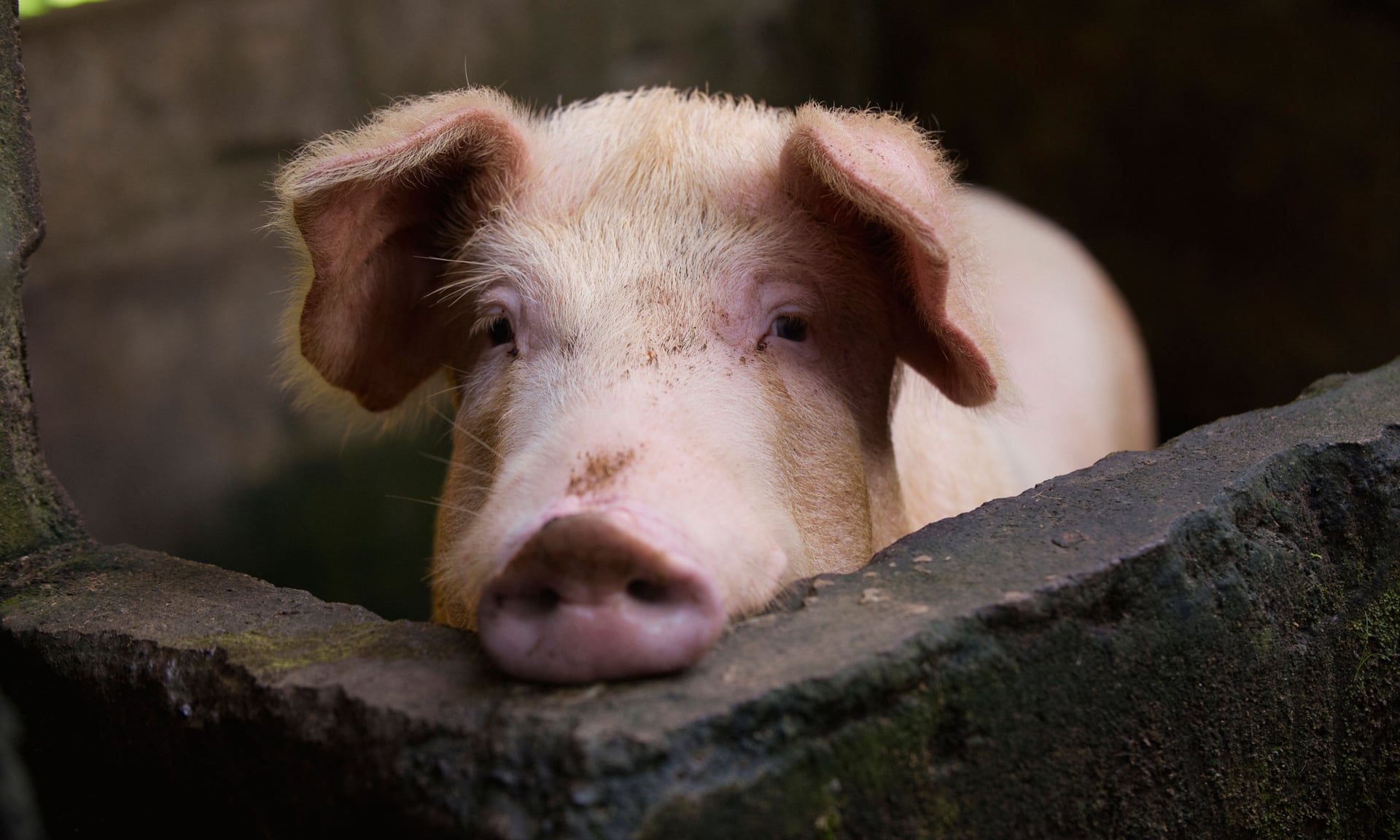
This is a Guardian article about a new swine flu that has been detected in China that has "pandemic potential", meaning it is auditioning for the next Covid-19. As published in PNAS, it is genetically descended from the H1N1 strain that caused a pandemic in 2009.  Quoting from the report, this strain, called G4 "was observed to be highly infectious, replicating in human cells and causing more serious symptoms in ferrets than other viruses do. Tests also showed that any immunity humans gain from exposure to seasonal flu does not provide protection from G4." Science has shown that this strain can pass from pigs to humans but has not shown a human to human transmission.


https://www.nytimes.com/2020/06/18/climate/trump-epa-perchlorate.html
An article in the NYT about a Trump administration decision not to limit perchorate in drinking water. Perchlorate is a toxic chemical in rocket fuel linked to fetal brain damage.  The EPA also overturned the scientific finding (how do you overturn a scientific finding?) that declared perchlorate a serious health risk for 5-16 million people in the US. The reason offered was that the "one size fits all" standard is less effective (federal control) versus state and local control. The National Resources Defense Council opposed the decision saying that this reversal threatens the health of pregnant moms and young children. Perchlorate can cause loss of IQ.

Sunday, June 14, 2020

The House That Covid-19 Built

https://www.nytimes.com/2020/06/11/climate/airborne-plastic-pollution.html
This is a report of a study done at Utah State University on microplastics in places like national parks and wilderness areas. The PI in the investigation suspected that the calculations, which reported microplastics in 98% of the samples and 4% of the dust particles that were tested, were incorrect, but upon retesting, the results were confirmed. In fact, the smaller particles that were detected, were surmised to have been carried  extremely long distances on air currents as part of the cycles of global dust transport.  Although previous papers have reported on microplastics in atmospheric deposition, this paper was the first to ask  "why and how is this happening."  Fine plastic particles in the air means that we are breathing them in, which may have health effects.


https://www.nytimes.com/2020/06/10/arts/music/bats-field-works-ultrasonic.html
This is a NYT article about bats, Stuart Hyatt's neighborhood bats. The composer and producer of the album "Ultrasonic" records bats, whose songs are so high in frequency that humans cannot hear them, makes them audible and sends them to composers. He has also made "field recordings" of  Scientology ceremonies and the Indiana State Fair and began to consider animals as his source material in 2018 on a trip to the Great Smoky Mountains State Park, where he recorded bats and translated their sounds to audible electronic signals. Then he actually found bats roosting 40 minutes from his home along wetlands near the Indianapolis airport. The tracks of "Ultrasonic" include "A Place Both Wonderful and Strange." His next library of sound will include poems from Arabic and English about cedar trees, read and sung over hypnotic instruments and accompanied by a comic book. And, yes, I ordered "Ultrasonic."

Friday, June 5, 2020

Groundhog Day Redux


https://www.nj.com/news/2020/06/nj-schools-will-teach-climate-change-education-with-new-curriculum.html An article from the Star Ledger celebrating NJ's inclusion of climate change in the K-12 curriculum. The NJ student learning standards will require the teaching of climate education across 7 areas: 21st Century Life and Careers, Comprehensive Health and Physical Education, Science, Social Studies, Technology, Visual and Performing Arts, and World Languages.  (Phys. Ed? how? - blogitorial comment). According to a 2019 poll, more than 80% of American parents and nearly 90% of American teachers believed that climate change should be taught in schools. (Conclusion: the inclusion of climate teaching comes a little late.) This will be implemented starting September 2021).


https://theconversation.com/a-few-superspreaders-transmit-the-majority-of-coronavirus-cases-139950
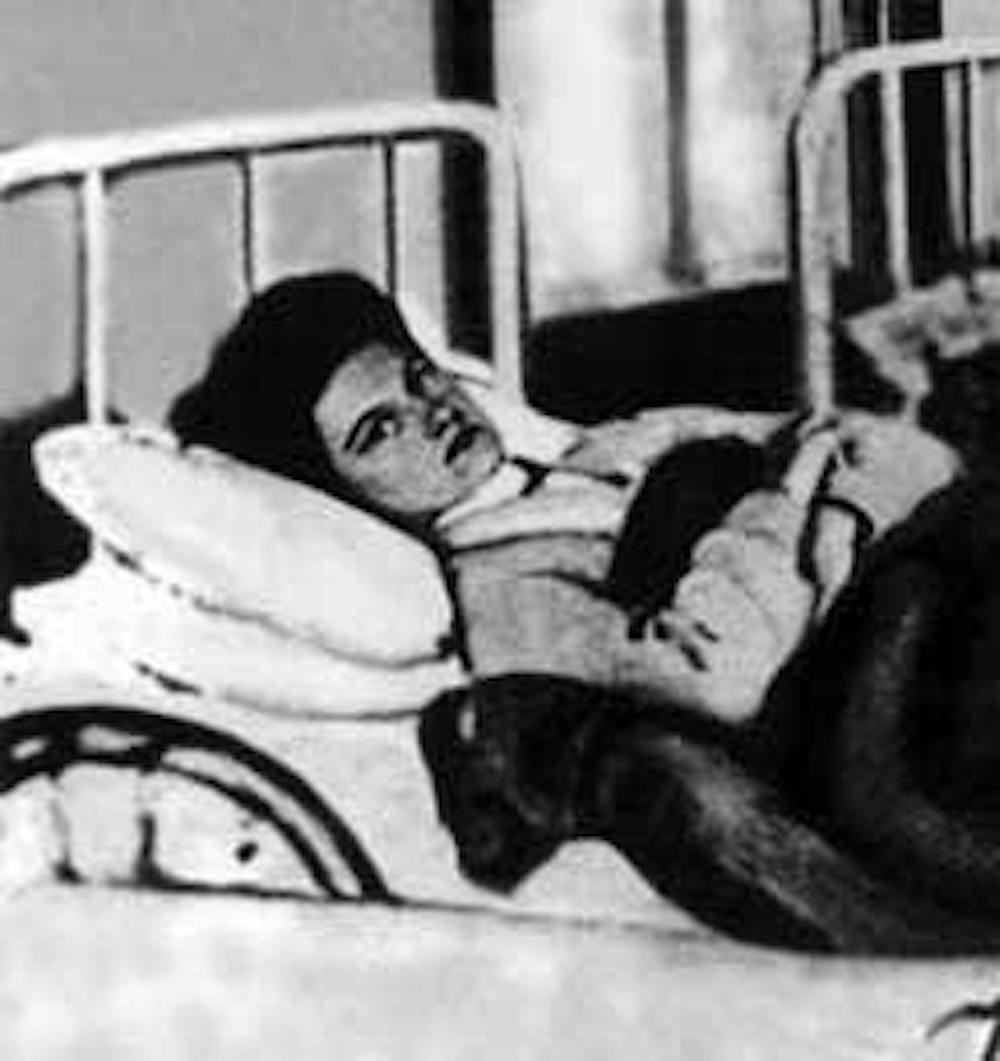
 Article from The Conversation about  transmission of the coronavirus by the director of the Center for Infectious Disease Dynamics at Penn State. Recent studies contradict earlier ones that have shown that on average one infected person infects two to three other people. There is evidence of superspreader events in which one person infects about fourteen other people. In South Korea, around 40 people who attended a single church service were infected at the same time. A superspreader is probably a person whose immune system has trouble subduing the virus, according to the article. And, since over 50% of those harboring the virus, may be asymptomatic, these individuals will carry on with their daily activities, unaware that they may be infecting people. A person's behaviors also contribute to superspreading.  Researchers in Hong Kong examined a number of disease clusters by using contact tracing to track down everyone with whom individual COVID-19 patients had interacted. They identified multiple situations where a single person was responsible for as many as eight new infections-  highlighting the importance of rapidly isolating people when they test positive or show symptoms. Historical examples of superspreaders include Typhoid Mary, who in the early 20th century infected 51 people with typhoid through the food she prepared as a cook.


This is a NYT opinion based on a recent UCLA study about health justice and Covid-19. The first graphic goes through 6 health conditions: COPD, Diabetes, Asthma, High Blood Pressure, Obesity and Kidney Disease and shows that the poorest were more likely to suffer from one or more chronic conditions that would make them more vulnerable to worse outcomes from the coronavirus than the richest Americans, using data from 40 American cities. The second graphic uses census tracts to show that the 6 chronic health conditions are all more prevalent in poorer Americans with a plot of income versus disease prevalence, concluding that decades of systemic racism have left their mark on health inequality. Quoted from the study, “When our politics starts to work better for those left behind, then their health will improve.”


https://www.nytimes.com/2020/06/05/science/ocean-biology-larvaceans-lasers.html
This NYT article describes a new type of laser that allows us to visualize some strange organisms, including some which live at extremely high pressure in complete darkness. The DeepPIV imaging system contains a laser that scans through the animals, sending data to a  computer which reconstructs the organisms. The Nature publication of this work describes a large larvacean that secrete balloon-like mucus  feeding structures three feet long. This is the first time scientists have seen these organisms. More than 99% of the biosphere resides in the oceans; compared to land, the global ocean is unknown.
 
This is a NYT article by Carl Zimmer reporting a study by European scientists in the Covid-19 Host Genetics Initiative showing links between severe Covid-19 and certain genetic variations, such as type A blood and a locus on chromosome 3, which has 6 genes on it, including one that encodes a protein known to interact with ACE2, the cellular receptor by which Covid-19 gains entry into the cell. This international effort includes a thousand researchers in 46 countries who are collecting DNA samples from people with the disease. Blood types may affect the disease, it is speculated, because the locus where the blood type gene is situated also contains a stretch of DNA that acts as an on-off switch for a gene producing a protein that ramps up the immune response.

https://www.nytimes.com/2020/06/01/science/mass-extinctions-are-accelerating-scientists-report.html This is a NYT article describing research published by PNAS about the increase in the rate of human-caused mass extinctions. This loss in biodiversity, increasing at this rate, threatens vast ecosystems and the ecosystem services and substances they provide, including fresh water, pollination, and pest and disease control. The critical window, as the study reports, will close within 10 to 15 years, sooner than expected. 543 species were lost during the last 100, comparable losses normally take 10,000 years. Scientists used population data from for 29,400 terrestrial vertebrate species compiled by the International Union for the Conservation of Nature and found that 1.7% of these are critically endangered and half of them have only 250 individuals. Losses of certain species will trigger a domino effect, ultimately threatening whole ecosystems.